
A Psychologist Specializing in Anxiety Reviews the Apollo Neuro
By Dr. Lienna Wilson, Licensed Psychologist | Vagus Vitality
This article includes affiliate links. I may earn a commission on qualifying purchases.
| QUICK SUMMARY | |
| What is it: | A wearable device that delivers gentle vibration patterns to the skin to shift the nervous system toward a calmer, more regulated state. |
| Best for: | People with sleep difficulties, evening anxiety, or high-demand schedules who want a passive nervous system support tool. |
| Not ideal for: | People whose primary goal is an energy boost. The Energy vibe was less compelling in my personal experience, though published research does support cognitive performance benefits under stress. |
| Bottom line: | Real, subjective benefit for sleep and wind-down after a year of daily use. The Unwind vibe is the highlight. Strong research base for a consumer wellness device. |
| Price: | $448 retail. Use code VagusNerve at apolloneuro.com/vagusnerve for $99 off. |
| ✓ Pros | ✗ Cons |
| ✓ Passive and hands-free, wear it and go about your daily activities | ✗ Expensive at $448 retail |
| ✓ Stronger research base than most consumer wellness devices, with published randomized controlled trials | ✗ Energy vibe had little noticeable effect for me personally |
| ✓ Comfortable for overnight wear, especially on the ankle | ✗ Proprietary charging cable |
| ✓ Eight free core vibes covering a wide range of goals | ✗ Premium vibes require a paid upgrade beyond the eight core ones |
| ✓ Genuinely improved my sleep after a couple weeks | ✗ Research base, while growing, is still early stage for some applications |
| ✓ One-time purchase, no ongoing fees for core use |
What It Is

The Apollo Neuro is a small wearable device that delivers gentle vibration patterns to the skin. It looks like a fitness tracker and can be worn on the wrist or ankle, or clipped to your clothing near your chest, collar, spine, or hip. I find the ankle the most comfortable option for extended wear, though I have not tried the clip.
The mechanism behind it is called vibroacoustic stimulation. Low-frequency vibration is delivered through the skin to nerve receptors, which carry the signal toward the brain along pathways that connect to the vagus nerve's network. This is thought to produce a measurable shift in the nervous system's overall activity level, similar in principle to how slow breathing or cold water exposure influences the nervous system, but delivered passively through the skin rather than requiring any active practice.
What makes the Apollo Neuro unusual among consumer devices is that this mechanism has been studied in multiple peer-reviewed clinical trials. See The Science: What the Research Actually Shows below for a full review of the evidence.
How It Works: The Vagus Nerve Connection
The vagus nerve is the longest nerve in the autonomic nervous system, running from your brainstem down through your heart, lungs, and digestive system. It acts as the body's primary communication highway between the brain and the internal organs, carrying signals in both directions. One of its most important functions is helping the brain assess whether you are safe. When that data signals safety, the brain eases off the stress response.
The result, in theory and in the published research, is a shift toward the body's rest-and-recovery state, associated with relaxation and restorative sleep. This shift is measurable through heart rate variability (HRV), a measure of how well the nervous system bounces between active and restful states. Higher HRV generally reflects a more resilient, better-regulated nervous system. For a plain-language overview of the vagus nerve and how it works, see What Is the Vagus Nerve? A Plain-Language Introduction.
The Vibes Explained
The Apollo app currently offers eight core vibes, and 15 smart vibes, each designed for a different state.
| Category | Core Vibes | SmartVibes (premium upgrade) |
|---|---|---|
| Energy | Energy: gives you a boost of energy | Confidence: steadies nerves before high-stakes moments Motivation: gets you started when momentum is low |
| Social | Social: elevates mood and energy | Creativity: unlocks creative flow Joy: lifts mood and sense of connection |
| Focus | Focus: filters out distraction | Good Morning: transitions you from sleep to a focused, energized day Good Afternoon: post-lunch energy lift Study: sharpens concentration |
| Recover | Recover: accelerates your body's recovery | Good Evening: rapidly winds you down from the day Pain Relief: eases emotional and physical pain |
| Meditate | Calm: a dose of zen for stressful situations | Meditation: deepens meditation practice Mindfulness: quiets mind for present-moment awareness |
| Relax | Unwind: rapidly relieves stress for deep relaxation Power Nap: eases you in and out of short rest |
Safe and Sound: grounds you after moments of duress |
| Sleep | Sleep: quiets your mind and eases you to sleep | Good Night: winds you down and puts you to bed, with Stay Asleep technology that plays automatically throughout the night if you stir |
| Intimacy and Connection | No core vibe | Love for Him: eases performance anxiety Love for Her: helps body feel safe, relaxed, and open to sensation |
My Personal Experience
I came to the Apollo Neuro primarily for sleep, and that is where I found the most meaningful benefit. My functional medicine doctor recommended it in early 2025, having used it herself with good results. I purchased it in March 2025 and have used it daily since.
My routine became this: I put on the device in the evening and run Unwind for 60 to 120 minutes while reading or doing something low-stimulation. Then I switch to Sleep and wear it overnight on my ankle. The transition from Unwind to Sleep feels natural, and I have noticed that I am less likely to lie awake than I was before.
One practical note for anyone with smaller wrists: I found the wrist placement uncomfortable for extended wear, particularly overnight. Switching to the ankle made it almost imperceptible. The device is lightweight and the band is soft, and I genuinely forget it is there.
The results with sleep were gradual rather than immediate. Over the first couple weeks, I noticed I was falling asleep more easily and waking up less often in the middle of the night. That improvement has held.
I have also tried the Recover and Calm vibes but found that they were not as effective as Unwind to help me achieve the needed sense of relaxation before sleep. Additionally, I tried the Energy vibe on several occasions when waking up, hoping for a more alert start to the morning. I noticed no meaningful difference compared to my baseline. This is consistent with what some other reviewers have reported, and worth being honest about.
I also tested several SmartVibes, which were provided by Apollo Neuro as a complimentary one-year trial. The Good Night Stay Asleep feature activated automatically throughout one night in short bursts, ten or more times between 1:00 am and 6:30 am, which is exactly what it is designed to do. The Pain Relief vibe was one I tried during a bout of neck pain and a headache, and I found it helpful in reducing the intensity. The Study vibe was useful when I ran it during therapy sessions; it seemed to support the kind of sustained attention that work requires. The Good Morning vibe was mildly helpful for easing into the day. My broader pattern holds: I feel a stronger response from soothing vibes than from energizing ones.
The Science: What the Research Actually Shows
Apollo Neuro lists 17 completed clinical trials on its research page, with 12 more underway. The quality of those studies varies considerably, and it is worth distinguishing between them.
The strongest single study is the Hallihan and Siegle (2022) double-blind randomized placebo-controlled crossover trial at the University of Pittsburgh. This is the gold standard of research design, and its finding of a statistically significant increase in heart rate variability (HRV) is meaningful. The honest caveat is that it was a pilot trial with a small sample size, and it has not yet been replicated at scale.
Two newer studies are worth noting. A 2025 randomized controlled trial by McKennon et al. at Washington State University, published in the American Journal of Medicine, followed 66 medical and pharmacy students over 12 weeks. Participants using the Apollo Neuro showed statistically significant improvements in burnout and wellbeing scores compared to controls, measured using five validated clinical scales. Importantly, the study explicitly states that Apollo Neuroscience had no input into the study design or analysis, and the research team received no compensation from the company.
A large observational study by Mandala et al. (2025) followed 935 adults who used both the Apollo Neuro and an Oura Ring, tracking nearly 475,000 nights of sleep data. The findings were dose-dependent: the more hours participants used the device overnight, the greater the sleep improvement. Among short sleepers (those regularly getting six hours or less), using the device for four or more hours per night was associated with an average gain of 46 minutes of sleep and a 77% reduction in the odds of a short night. Participants sleeping more than six hours at baseline also saw gains, though smaller. The extended sleep came with an increase in REM sleep rather than lighter sleep stages, which is the more restorative outcome. Two important caveats: the study is currently a preprint, meaning it has not yet completed peer review, and the lead author is affiliated with Apollo Neuroscience. Those limitations are worth keeping in mind, and independent replication would strengthen the findings considerably.
A published open-label pilot at the University of Pittsburgh also found improvements in fatigue, sleep, and depression in patients with a chronic autoimmune condition characterized by nervous system overdrive, though the study had no control group and was funded by Apollo Neuroscience (Hammaker et al., 2024). One independent peer-reviewed study found no significant additional benefit from the Apollo Neuro when added to ketamine-assisted therapy for anxiety, with no significant difference between Apollo users and controls on anxiety scores (Tsang et al., 2025). The study was small and non-randomized, and the authors note the complexity of concurrent interventions as a key limitation. It is worth noting as the only independent peer-reviewed study to test the device in a clinical therapeutic setting and find no effect.
Apollo also promotes a second double-blind trial conducted by its co-founder at the University of Pittsburgh. It is not described here since it has not been published in a peer-reviewed journal. Several additional studies promoted by Apollo were not included in this review for the same reason. This does not mean the findings are invalid, but peer review is the gold standard for evaluating clinical research.
Beyond the studies described above, Apollo Neuro is currently being investigated in a number of ongoing clinical trials across a range of populations, including veterans with PTSD, physicians experiencing burnout, people with Long COVID, adolescents with chronic migraine, and individuals undergoing psychedelic-assisted therapy. Results from these trials are not yet available, but the breadth of research activity suggests the evidence base is likely to grow considerably in the coming years.
The honest overall picture is this: the Apollo Neuro has a more substantial and diverse research base than most consumer wellness devices. The evidence is strongest for stress relief, sleep, and recovery. It is not yet at the level of the decades of research behind breathwork or exercise, but the body of evidence is genuinely growing, and the two most rigorous studies in the set hold up to scrutiny. It is also worth noting that the device is now HSA and FSA eligible, which reflects a degree of recognition from the healthcare system that most wellness wearables do not have.
Who It's Best For
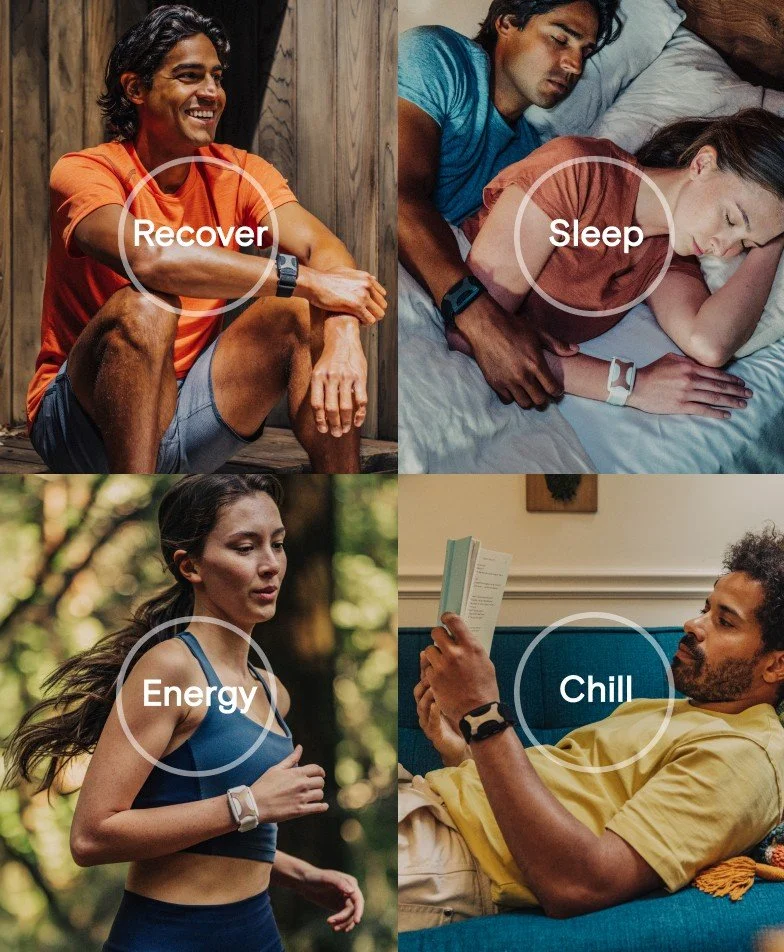
Based on my experience and the research, I think the Apollo Neuro is a particularly good fit for a few types of people.
It is well-suited for people who struggle to maintain active relaxation practices consistently. Breathwork and meditation are more effective than any wearable device, but they require motivation and practice. The Apollo Neuro requires neither.
It is a strong option for people dealing with sleep difficulties. The Sleep vibe, used as part of a consistent evening routine, is where the device performs best in both research and personal experience.
It may be less useful for people looking for an energy boost or cognitive performance enhancement. My personal experience with the Energy vibe was underwhelming, though the published research does show some cognitive benefits under stress.
It is also not a substitute for working with a mental health professional if you are dealing with significant anxiety, trauma, or mood difficulties. It is a wellness tool, not a clinical intervention.
If you are looking for a device designed specifically for acute anxiety or panic rather than background nervous system support, the CalmiGo may be a better fit, which works through a different mechanism and is designed for active use during anxiety or panic attacks.
Practical Notes
Battery life is solid. I typically charge it daily; the SmartVibes Stay Asleep feature runs throughout the night in frequent short bursts, so charging every day is worth building into your routine. The charging cable is proprietary, which is a minor inconvenience.
The app is straightforward and not overwhelming. You select a vibe, set a duration and intensity, and press start. There are more detailed settings available if you want to adjust intensity levels, but the defaults work fine. A caveat: the premium vibes beyond the eight core ones require a paid upgrade.
One feature I found genuinely useful: once a program is running, you can turn off your phone's Bluetooth and the device continues without interruption. You can also schedule vibes in advance, so something like Energy at 7:00 am will play automatically without needing to open the app. I turn off my Bluetooth at night to limit EMF exposure, and it was reassuring to find the device works perfectly without it.
Wearing the device on the ankle rather than the wrist is worth trying if you find the wrist placement uncomfortable during sleep or extended wear.
The device retails at $448 at the time of writing, but you can get $99 off with my coupon code VagusNerve. That is a meaningful investment, and I would not describe it as an impulse purchase. If you are primarily interested in vagal activation and nervous system regulation, I would suggest building a consistent breathwork practice first, because that is free and has a stronger evidence base. The Apollo Neuro works best as a complement to practices like that, not a replacement for them.
Verdict
The Apollo Neuro delivered real, subjective benefit for sleep and evening wind-down after a year of daily use. The research behind its relaxation applications is the strongest of any consumer vagal stimulation device currently on the market. The energy and stimulation vibes were less impressive in my experience.
It is not a magic solution, but for the right person it is a well-designed, passive tool with a stronger research base than most in this category. That combination is harder to find than it should be.
Ready to try the Apollo Neuro?
Shop at apolloneuro.com/vagusnerve and use code VagusNerve at checkout for $99 off.
References
Hallihan, G. M., & Siegle, G. J. (2022). Wearable vibrotactile stimulation for recovery from stress: A randomized controlled pilot trial. European Journal of Applied Physiology, 122(10), 2235-2248. https://doi.org/10.1007/s00421-022-05026-x
Hammaker, K., Hu, H., Laffoon, M., Freno, L. A., Lafyatis, R., Park, Y., & Domsic, R. T. (2024). Wearable in systemic sclerosis: A pilot study of the Apollo wearable demonstrates improvement in fatigue, Raynaud phenomenon and quality-of-life in patients with systemic sclerosis. The Journal of Rheumatology, 52(2), 158-164. https://doi.org/10.3899/jrheum.2024-0551
Mandala, M., Krishnan, S., Weathington, N., Breus, M., & Rabin, D. (2025). Association between duration of transcutaneous vibratory stimulation delivered by the Apollo Neuro device and extension of total sleep time [Preprint]. JMIR Preprints. https://preprints.jmir.org/preprint/79588/accepted
McKennon, S. A., Bindler, R. J., Miller, J. C., Wilson, M., & DeWitt, D. E. (2025). Evaluating the impact of Apollo Neuro wearable on wellbeing in medical and pharmacy students: A preliminary prospective randomized controlled study. The American Journal of Medicine, 138(12), 1734-1741. https://doi.org/10.1016/j.amjmed.2025.07.045
Tsang, V. W. L., Tao, B., Olthuis, R., Allard, P., Bhanot, S., Wong, S., & Kryskow, P. (2025). The effect of the Apollo Neuro device on anxiety among participants who underwent ketamine assisted therapy. Journal of Psychiatric Research, 191, 678-683. https://doi.org/10.1016/j.jpsychires.2025.09.032