
How to Activate Your Vagus Nerve: A Science-Backed Guide to Every Method
By Dr. Lienna Wilson, Licensed Psychologist | Vagus Vitality
If you have read about the vagus nerve for more than five minutes, you have probably come across a list of things that activate it: breathwork, cold plunges, humming, meditation, forest bathing. The list sounds plausible, maybe even appealing. But it can also feel a little scattered, a collection of wellness recommendations without much explanation of what ties them together or how to actually use them.
This article is the answer to that. It covers every major method that has genuine research behind it, explains the mechanism for each one (why it works, not just that it works), and gives you enough practical detail to start using it. It pulls from the science introduced in both What Is the Vagus Nerve? A Plain-Language Introduction and The Gut-Brain Connection: How the Vagus Nerve Connects Digestion, Mood, and Health, where each of these methods is introduced briefly. Consider this the full deep dive.
One thing worth saying at the outset: these are not separate tools for separate problems. They are all inputs into the same system. The vagus nerve responds to consistent, repeated signals. The more often you give it the right kind of input, the better your baseline vagal tone becomes, and the more resilient your nervous system grows over time.
Why Activating the Vagus Nerve Actually Helps
Vagal tone refers to the baseline activity level of the vagus nerve. High vagal tone means the nerve is actively regulating your heart rate, breathing, digestion, and immune response. It means you come back to calm faster after stress, your HRV (heart rate variability) is higher, and your body's systems are well-coordinated. Low vagal tone is associated with chronic sympathetic dominance: the wired, tense, can't-fully-come-down feeling that many people normalize as just how they are (Lehrer & Gevirtz, 2014).
The encouraging piece of this is that vagal tone is trainable. It responds to consistent lifestyle-level inputs, the same way cardiovascular fitness responds to exercise. You do not need a device, a special program, or a dramatic life change. You need repetition with the right inputs.
Most of the methods below work through one of three pathways: sending signals upward through the vagus nerve via the body's sensory systems; slowing the breath to activate the vagal brake on the heart; or signaling safety to the nervous system through the social engagement system. Each one is explained below.
Slow, Controlled Breathing
This is the most reliably documented method, and the one with the clearest mechanism. The vagus nerve is closely linked to the respiratory system, and breathing rate directly influences vagal activity.
At a resting rate of 12 to 20 breaths per minute, most people are breathing too fast to fully activate the vagal brake on the heart. When you slow down to around six breaths per minute, roughly five seconds of inhaling followed by five seconds of exhaling, something measurable happens: heart rate variability increases, meaning the variability between each heartbeat expands and becomes more flexible. This is one of the clearest indirect measures of vagal function we have (Lehrer & Gevirtz, 2014).
Before beginning any particular breathing exercises, learn the basic diaphragmatic technique. Shifting respiration from the chest to the abdomen stimulates the vagus nerve through the sensory nerve fibers lining the abdominal organs (Gerritsen & Band, 2018).
- Sit comfortably with your back straight and feet on the floor. Place your right hand on your stomach and your left hand on your chest.
- Exhale, then inhale slowly. Your stomach should rise under your right hand first, then your chest should expand.
- Exhale in reverse: chest drops first, then stomach falls.
- If this feels difficult sitting up, try it lying flat on your back with the same hand positions. Most people find it easier to feel the movement that way.
Once comfortable with diaphragmatic breathing, the next step is adding a brief pause at the top and bottom of each breath. Equal breathing with pauses is well supported by HRV research (De Couck et al., 2019) and places you at roughly five cycles per minute, within the resonance breathing zone that maximizes HRV (Lehrer & Gevirtz, 2014). The pauses come from classical pranayama and add a quality of steadiness that many people find easier to sustain than continuous counting.
- Inhale for four counts.
- Pause for one count.
- Exhale for four counts.
- Pause for one count. Repeat twelve times. Aim for two sessions daily, morning and before sleep. Five to ten minutes is enough to produce measurable HRV effects with regular practice.
Meditation and Mindfulness
The relationship between meditation and vagal tone is well established. For example, a study where participants did loving-kindness meditation over nine weeks showed increases in vagal tone. The mechanism was social: people who felt more connected and safe in their relationships showed the greatest gains in vagal function (Kok et al., 2013). Loneliness and social isolation have the opposite effect, which helps explain their well-documented associations with cardiovascular disease and poor health outcomes.
Another type of meditation called body scan is the practice of systematically directing attention through the body. It has been shown to produce significantly greater increases in vagal tone compared to progressive muscular relaxation and other relaxing activities (Ditto et al., 2006).
The body scan does not require a guided track. Regularity matters more than session length. The procedure is straightforward:
- Sit upright in a chair, feet flat on the floor. Close your eyes and take a few slow, deep breaths.
- Direct your attention to one area of the body at a time, starting at the top of your head and moving slowly downward.
- Notice whatever sensations are present. If you feel tension, breathe into that area. Do not try to force relaxation. Just observe.
- Move through your face, neck, shoulders, chest, arms, stomach, hips, legs, and feet.
- When your mind wanders, gently bring your attention back. That is the practice, not a mistake. Five to ten minutes daily, morning and evening if possible.
Exercise, Yoga, and Mind-Body Movement
Exercise deserves its own section because it is often underestimated as a vagal activator, particularly among people who think of vagus nerve health as primarily a meditation and breathwork territory.
A 2024 systematic review and meta-analysis of randomized controlled trials found that regular aerobic exercise training produces significant increases in HRV, the primary indirect measure of vagal tone (Amekran & El Hangouche, 2024). The effect was consistent across different types of aerobic exercise and across different populations. The mechanism involves the nervous system gradually rewiring itself over time. The heart becomes more responsive to vagal input, and the balance tips more toward rest-and-digest, even when you're not exercising. This is one reason athletes tend to have higher HRV and lower resting heart rates.
- Aerobic activity: 20 to 40 minutes of moderate-intensity movement (brisk walking, cycling, swimming) three to five times per week.
- Mind-body practices (yoga, tai chi, qigong) count toward this and are especially efficient, combining movement, breath, and attention in one session.
- HRV benefits from exercise accumulate over weeks to months. Consistency matters more than intensity.
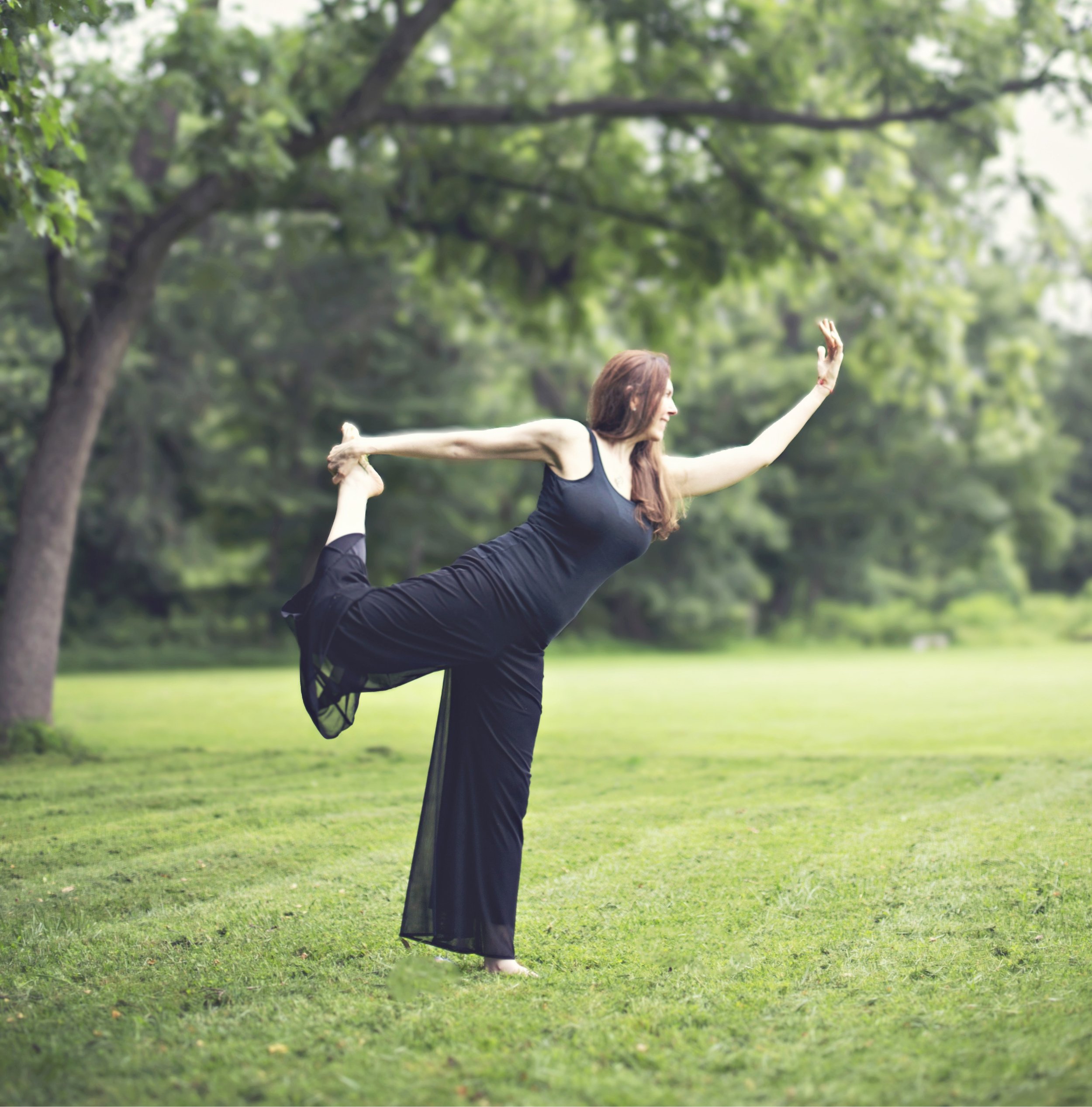
Yoga, tai chi, and qigong deserve specific mention here because they occupy their own category within the movement research. All integrate slow, intentional movement with breath coordination and sustained attention, which means they activate vagal pathways through multiple mechanisms at once: the physical movement, the controlled breathing, and the focused awareness component all contribute. A 2018 analysis of 17 clinical trials found that tai chi and yoga both significantly improved HRV, including the specific measure that most directly reflects how active the vagus nerve is (Zou et al., 2018).
What makes these mind-body practices particularly interesting from a nervous system perspective is that their benefits are not purely cardiovascular. The slow, deliberate pace keeps breathing in a vagally favorable range. Many postures involve the diaphragm and the abdominal organs directly, which stimulates the vagal sensory nerve fibers in the gut. And the attentional quality of these practices, staying present in the body rather than caught in thought, appears to support the same parasympathetic shift that meditation produces. They are, in a meaningful sense, movement and meditation and breathwork practiced simultaneously.
Humming, Chanting, Singing, and Gargling
These are among the more immediately accessible methods, and the mechanism is anatomically direct. The vagus nerve travels through the larynx, pharynx, and the muscles of the soft palate. Humming, chanting, singing, and gargling create vibration in exactly the tissue that the vagus nerve runs through. That vibration directly stimulates the vagus nerve's sensory fibers and produces a calming response that many people can feel within seconds (Inbaraj et al., 2022). Prolonged exhaling during humming also combines the breathing mechanism described above, making humming one of the more efficient activators: it works through at least two distinct pathways simultaneously.
Chanting the sound "Om", which is commonly used in yoga practice, has been studied specifically in the context of HRV. Research found that just five minutes of loud OM chanting produces immediate increases in parasympathetic activity, with effects detectable on HRV measures (Inbaraj et al., 2022). The extended exhale during the 'mmmm' phase likely contributes, but the vibratory stimulation of vagal sensory nerve fibers is the primary proposed mechanism.
- Humming: take a deep inhale, then hum a single sustained note on the exhale ("hmmmm"), letting the sound trail as long as your breath allows. Feel the vibration in your chest and throat. Three to five minutes is enough.
- OM chanting: the extended "mmmm" exhale at the end drives most of the effect. Five minutes of loud OM chanting produces measurable increases in parasympathetic activity.
- Gargling: vigorous gargling with water for 30 to 60 seconds engages the same nerve pathway. Easy to fold into a morning routine.
Heat Exposure and Sauna
Sauna use has become increasingly popular as a tool for stress reduction, recovery, and overall health. While most people think of a sauna as simply a way to relax, it also produces measurable effects on the autonomic nervous system.
When you sit in a sauna, your body experiences a temporary heat stress. Heart rate increases, blood vessels dilate, and the body works to regulate temperature. Once the session ends and your body begins cooling down, parasympathetic activity increases as the nervous system shifts back toward recovery mode. Several studies have found that sauna bathing is associated with improvements in heart rate variability (HRV), one of the most commonly used indicators of vagal tone (Laukkanen et al., 2018; Laukkanen et al., 2019).
In practice, a typical Finnish sauna session runs 15 to 30 minutes at 176° to 212°F (Laukkanen et al., 2018). Research shows that the post-session cooling period is when parasympathetic activity rebounds above baseline, suggesting even a single session is sufficient to trigger the effect (Laukkanen et al., 2019). Infrared saunas, which operate at lower temperatures, produce a less intense acute stressor and a comparably gentler response, though the research base is thinner for infrared specifically.
- Hot shower: 10 to 15 minutes at the hottest comfortable temperature. Step out and cool down naturally.
- Hot bath: full-body immersion heats your core more efficiently. Aim for 15 to 20 minutes.
- Steam room: 10 to 15 minutes if your gym has one.
- Sauna: the most potent option for those with access. Typical session is 15 to 30 minutes. The post-session cooling period is when parasympathetic activity rebounds above baseline.
- Contrast therapy: combine heat with cold exposure immediately after for an amplified effect. One to three rounds of heat followed by cold. End on cold for alertness; end on heat for relaxation.
Cold Water Exposure
Cold water activates the vagus nerve through the diving reflex, a preserved evolutionary response to immersion in cold water. When cold water contacts the face and skin, particularly the forehead and cheeks, it triggers an immediate parasympathetic response: heart rate slows, blood is shunted away from the extremities, and the body conserves resources. This response travels through the vagus nerve and quickly dials down the stress response (Mooventhan & Nivethitha, 2014).
Cold exposure also reduces systemic inflammation through the vagus nerve's role in the inflammatory reflex. When vagal tone is higher, the body's built-in anti-inflammatory pathway works more effectively (Tracey, 2002). Cold exposure appears to support this system from both directions.
- Start here: splash cold water on your face (forehead and cheeks) for 30 seconds at the sink. Immediately effective, no equipment needed.
- Next step: end your shower with 30 to 60 seconds of cold water.
- Further: full cold immersion up to the neck amplifies the effect but is not required for a real physiological response.
- Note: if combining heat and cold, always do heat first, cold second.
Forest Bathing and Time in Nature
Shinrin-yoku, the Japanese practice of spending time in forests with the specific intention of sensory immersion, has been the subject of a growing body of physiological research. A landmark study by Park and colleagues, conducted across 24 forests in Japan, found that forest environments compared to urban environments produced significant reductions in cortisol, lower blood pressure, and measurable increases in parasympathetic nervous system activity as measured by HRV (Park et al., 2010).
The mechanism is not fully understood, but several contributing factors have been proposed: phytoncides (airborne compounds released by trees, which appear to have direct physiological effects); reduced ambient noise and visual complexity, which lowers the cognitive load the nervous system must process; and the simple absence of the threat-detection demands of urban environments.
- Aim for roughly two hours in a natural environment per week. Shorter exposures produce measurable autonomic effects too.
- A park counts if a forest is not accessible. The key variables are greenery, relative quiet, and reduced built-environment density.
- Leave your phone in your pocket. Part of the benefit comes from reduced cognitive demand, not just the presence of trees.
Vagus Nerve Stimulation Devices
Non-invasive consumer devices represent the newest category of vagal activation tools, and the research is still developing. The two most commonly discussed are the Apollo Neuro, which delivers gentle vibration stimulation, and the Pulsetto, which delivers electrical stimulation to the neck over the vagus nerve's accessible pathway.
Apollo Neuro has the strongest published evidence among consumer devices. A randomized controlled trial at the University of Pittsburgh found that calming vibration patterns delivered by the device increased high-frequency HRV and supported physiological recovery from stress, with effects detectable in both HRV measures and self-reported stress levels (Hallihan & Siegle, 2022). The device works through a vibroacoustic mechanism: low-frequency vibration is delivered to the skin, where it activates nerve receptors in the skin that feed signals upward through the vagus nerve. To learn more, please see A Psychologist Specializing in Anxiety Reviews the Apollo Neuro.
Transcutaneous auricular vagus nerve stimulation (taVNS), a category that includes some consumer ear-based devices, has been studied more extensively in clinical research using medical-grade equipment. The ear contains a branch of the vagus nerve (the auricular branch), making it an accessible stimulation site without surgical implantation. The evidence base for taVNS in anxiety and autonomic regulation is growing, though most of the strongest studies use devices and protocols not yet available in consumer products.
A realistic way to think about devices: they are an additional input, not a replacement for the lifestyle-level practices above. The evidence for breathwork, cold exposure, exercise, and meditation is more robust and longer-standing. Devices can complement those practices, particularly for people who find manual practices difficult to maintain or who want real-time feedback on autonomic state.
Putting It Together: What Actually Sticks
The research on vagal tone converges on one consistent finding: it improves with regular practice and declines without it. Vagal tone is not a setting you adjust once. It is a measure of how consistently you have been giving your nervous system the right kind of input.
That means the best practice is the one you will actually repeat. For most people, a realistic starting point is:
Breathing. Five to ten minutes of slow, controlled breathing at around six breaths per minute, once daily. Morning or bedtime works well. This has the fastest measurable effect on HRV and the most immediate felt sense of calm.
Cold water on the face. Thirty seconds at the sink in the morning. Low barrier, immediate effect, easy to sustain.
Something that moves your body. Twenty to forty minutes of aerobic activity, three to five times per week. The vagal benefits of exercise accumulate over months, which is also why people who stop exercising notice their stress resilience decline.
Nature when possible. Even a 20-minute walk in a green, relatively quiet environment has measurable autonomic effects. Weekly, if not more.
Humming, chanting, meditation, and devices can be layered in as interest and capacity allow. None of them require special equipment, training, or a significant time commitment. And all of them target a nerve that runs from your brainstem to your gut and touches nearly every major system in your body along the way. The vagus nerve is a physical structure, and it responds to physical inputs. The more consistently you provide those inputs, the better it works. That is the whole practice.
Clinical References
Amekran, Y., & El Hangouche, A. J. (2024). Effects of exercise training on heart rate variability in healthy adults: A systematic review and meta-analysis of randomized controlled trials. Cureus, 16(6), e62465. https://doi.org/10.7759/cureus.62465
De Couck, M., Caers, R., Musch, L., Fliegauf, J., Giangreco, A., & Gidron, Y. (2019). How breathing can help you make better decisions: Two studies on the effects of breathing patterns on heart rate variability and decision-making in business cases. International Journal of Psychophysiology, 139, 1–9. https://doi.org/10.1016/j.ijpsycho.2019.02.011
Ditto, B., Eclache, M., & Goldman, N. (2006). Short-term autonomic and cardiovascular effects of mindfulness body scan meditation. Annals of Behavioral Medicine, 32(3), 227–234. https://doi.org/10.1207/s15324796abm3203_9
Gerritsen, R. J. S., & Band, G. P. H. (2018). Breath of life: The respiratory vagal stimulation model of contemplative activity. Frontiers in Human Neuroscience, 12, 397. https://doi.org/10.3389/fnhum.2018.00397
Hallihan, G. M., & Siegle, G. J. (2022). Wearable vibrotactile stimulation for recovery from stress: A randomized controlled pilot trial. European Journal of Applied Physiology, 122(10), 2235–2248. https://doi.org/10.1007/s00421-022-05026-x
Inbaraj, G., Holla, R., Rao, M., Acharya, V., Babu, N., Kamath, G., & Mohan, R. (2022). Effect of OM chanting and yoga nidra on blood pressure, heart rate variability and psychological parameters in the elderly. International Journal of Yoga, 15(2), 131–137. https://doi.org/10.4103/ijoy.ijoy_141_21
Kok, B. E., Coffey, K. A., Cohn, M. A., Catalino, L. I., Vacharkulksemsuk, T., Algoe, S. B., Brantley, M., & Fredrickson, B. L. (2013). How positive emotions build physical health: Perceived positive social connections account for the upward spiral between positive emotions and vagal tone. Psychological Science, 24(7), 1123–1132. https://doi.org/10.1177/0956797612470827
Laukkanen, J. A., Laukkanen, T., & Kunutsor, S. K. (2018). Cardiovascular and other health benefits of sauna bathing: A review of the evidence. Mayo Clinic Proceedings, 93(8), 1111–1121. https://doi.org/10.1016/j.mayocp.2018.04.008
Laukkanen, T., Lipponen, J., Kunutsor, S. K., Zaccardi, F., Araujo, C. G. S., Makikallio, T. H., Khan, H., Willeit, P., Lee, E., Poikonen, S., Tarvainen, M., & Laukkanen, J. A. (2019). Recovery from sauna bathing favorably modulates cardiac autonomic nervous system. Complementary Therapies in Medicine, 45, 190–197. https://doi.org/10.1016/j.ctim.2019.06.011
Lehrer, P. M., & Gevirtz, R. (2014). Heart rate variability biofeedback: How and why does it work? Frontiers in Psychology, 5, 756. https://doi.org/10.3389/fpsyg.2014.00756
Mooventhan, A., & Nivethitha, L. (2014). Scientific evidence-based effects of hydrotherapy on various systems of the body. North American Journal of Medical Sciences, 6(5), 199–209. https://pmc.ncbi.nlm.nih.gov/articles/PMC4049052/
Park, B. J., Tsunetsugu, Y., Kasetani, T., Kagawa, T., & Miyazaki, Y. (2010). The physiological effects of Shinrin-yoku (taking in the forest atmosphere or forest bathing): Evidence from field experiments in 24 forests across Japan. Environmental Health and Preventive Medicine, 15(1), 18–26. https://doi.org/10.1007/s12199-009-0086-9
Tracey, K. J. (2002). The inflammatory reflex. Nature, 420(6917), 853–859. https://doi.org/10.1038/nature01321
Zou, L., Sasaki, J. E., Wei, G. X., Huang, T., Yeung, A. S., Neto, O. B., Chen, K. W., & Hui, S. S. (2018). Effects of mind-body exercises (tai chi/yoga) on heart rate variability parameters and perceived stress: A systematic review with meta-analysis of randomized controlled trials. Journal of Clinical Medicine, 7(11), 404. https://doi.org/10.3390/jcm7110404